


Hartenberg Wine Estate in the Bottelary Hills
is situated in a sheltered valley on the north-eastern slopes of the Bottelary Hills near Stellenbosch. The vineyards span around 250 metres in elevation and face north, west and east. This creates significant differences in sunlight, temperature and ripening times within the estate. The Mediterranean climate, with warm, dry summers and cool, rainy winters, provides particularly good conditions for Shiraz, Chardonnay and Cabernet Sauvignon.

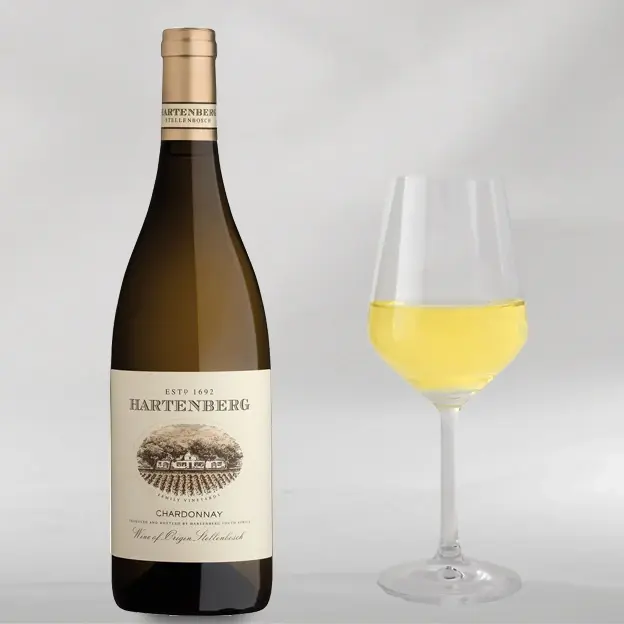


The history of winegrowing at Hartenberg dates back to 1692. At that time, Cunraad Boin and Christoffel Esterhuizzen received permission to cultivate the land and planted around 2,000 vines. In 1704, Esterhuizzen received the title deed for “Het Hartenberg”. The farm changed hands several times over the following centuries. An important phase began in 1948 under Maurice and Eleanor Finlayson, whose family significantly developed viticulture on the estate. Hartenberg has been owned by the Mackenzie family since the late 1980s.
Hartenberg has a particularly close association with Shiraz, or Syrah. Shiraz was bottled separately here as early as 1968. According to the winery, this made Hartenberg the first South African producer to bottle the variety under its own name. Today the Shiraz range extends from Estate Shiraz through The Stork to the limited Gravel Hill Syrah. Different soils and vineyard parcels are deliberately considered separately.
This approach is especially evident in Gravel Hill Syrah. The vines grow on a layer of iron-rich stones known as Koffieklip that is only around 40 centimetres deep and lies over deep clay subsoil. Only a few hundred metres away, The Stork grows on deep, red, clay-rich soils yet ripens noticeably later. The two wines demonstrate how strongly soil and site within a single estate can alter the character of the same grape variety.
Alongside Shiraz, Chardonnay and Cabernet Sauvignon play important roles. The Eleanor Chardonnay is part of the Signature Collection and commemorates Eleanor Finlayson, who shaped the winery together with her husband Maurice from 1948 onwards. With The Mackenzie, Hartenberg also produces a Bordeaux-inspired red blend. Riesling, Merlot and other estate wines complete the range. All Hartenberg wines are produced, bottled and packaged on the estate.
Another focus today is regenerative vineyard management. Since 2010, the team has increasingly worked with diverse cover crops to improve soil fertility and biodiversity. According to the estate, Hartenberg became the first South African winery in 2024 to be verified under the science-based Ecological Outcome Verification System for regenerative agriculture. The estate had already protected large areas of natural vegetation and wetlands before this.
Wine production is now led by Head Winemaker Reynie Oosthuizen, supported by Winemaker Kelsey Nel and Viticulturist Wilhelm Joubert. Hartenberg thus combines more than three centuries of winegrowing history with a strong focus on soils and individual vineyard sites. At Vin Africa, Hartenberg stands particularly for Shiraz from Stellenbosch, complemented by Chardonnay, Cabernet Sauvignon and characterful blends from the Bottelary Hills.