


Dornier Wines in the Blaauwklippen Valley
is located at the foot of Stellenbosch Mountain. The vineyards lie mainly on cool slopes at elevations of around 100 to 200 metres. Weathered red and yellow granite, Tukulu and Oakleaf soils, as well as areas of Table Mountain sandstone, create varied conditions within the estate. The high mountains surrounding the valley retain cooling Atlantic air currents in the region for longer and support slow grape ripening.




The agricultural history of the property can be traced back to 1694, when Jan Jac van Dyk farmed land here. The modern story of Dornier, however, began in 1995 with the artist Christoph Modeste Dornier, a son of aircraft designer Claude Dornier. He initially bought one of the farms and gradually converted former fruit-growing and livestock areas into vineyards. The first wine under the Dornier name was released in 2002.
Christoph Dornier deliberately brought wine, art and architecture together. This is particularly evident in the modern winery at the foot of Stellenbosch Mountain, defined by clean architectural lines. The estate also includes historic buildings, among them a homestead designed by Sir Herbert Baker and an old wine cellar whose origins date back to the late 17th century. In December 2020, Dornier was acquired by Jan Rupert and his sons and remains family-owned.
Cabernet Sauvignon is one of the estate's most important grape varieties and accounts for a particularly large share of the red plantings. Equanimity Cabernet Sauvignon represents Dornier's classic Stellenbosch style, with dark fruit, cassis, structuring tannins and maturation in French oak. Merlot, Cabernet Franc, Malbec and Petit Verdot also play important roles. These Bordeaux varieties are used, among other wines, for Donatus, the estate's premium red blend.
Among the white varieties, Chenin Blanc and Sémillon are central. Moordenaarskloof Chenin Blanc comes from a parcel planted in 1986 at the foot of Stellenbosch Mountain. Different soil types within this small vineyard contribute to the wine's complexity. Sémillon grows on deeply weathered red and yellow granite soils with a higher clay content and, for selected bottlings, is fermented in French oak and matured on the fine lees.
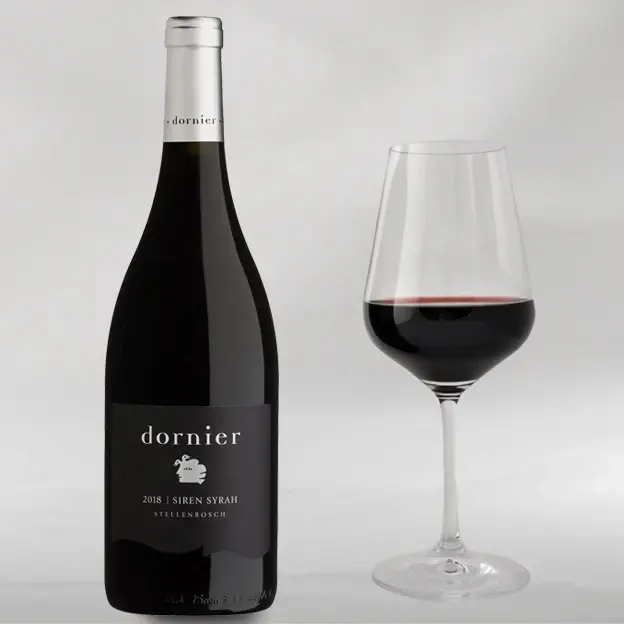
The range has since become considerably broader. Dornier currently offers, among others, Merlot, Malbec, Syrah, Pinotage, Tempranillo, Pinot Grigio and various blends. It is important to distinguish between the location of the winery and the actual origin of individual wines. The current Dornier Pinotage 2023, for example, comes from dry-farmed bush vines in the Swartland rather than the estate's Stellenbosch vineyards. The Moordenaarskloof range may also include grapes from other areas.
Dornier therefore combines a distinctive site on Stellenbosch Mountain with a comparatively modern history. Granite soils, cooler hillside locations and classic Bordeaux varieties shape many of the estate wines, while selected vineyards from other regions broaden the range. At Vin Africa, Dornier stands particularly for Cabernet Sauvignon, characterful blends and Chenin Blanc from the Stellenbosch area.